

Complete Guide to Buying Used Cars Safely and Affordably
The used car market is booming, offering incredible value compared to new vehicles. However, navigating this landscape requires diligence. Buying a used car safely and affordably means minimizing risk and maximizing your investment. This comprehensive guide walks you through every essential step, ensuring you drive away happy, not stranded.
Phase 1: Preparation and Budgeting
Before you even look at a single vehicle, meticulous preparation is key. This phase sets the stage for a smooth, affordable transaction.
Determine Your True Budget
Affordability isn’t just about the sticker price. Calculate the total cost of ownership (TCO). This includes potential sales tax, registration fees, mandatory insurance, and an emergency fund for immediate repairs. A general rule is to allocate no more than 15-20% of your take-home pay toward all vehicle-related expenses (payment, insurance, fuel, maintenance).
Secure Financing Before Shopping
If you need a loan, get pre-approved by a credit union or bank. Knowing your maximum budget and interest rate gives you significant leverage during negotiations with dealers. Avoid relying solely on dealer financing, which can sometimes come with higher rates and pressure to close the deal quickly.
Identify Needs vs. Wants
Be brutally honest about what you need in a vehicle. Do you need high fuel efficiency for commuting (a sedan or hybrid)? Do you need significant cargo space and towing capacity (an SUV or truck)? Filter your search to models known for reliability in your required category, such as specific Honda, Toyota, or Subaru models.
Phase 2: Research and Sourcing
Once you have a budget and target models, it’s time to deep-dive into the market.
The Power of Vehicle History Reports
Never buy a used car without reviewing a detailed Vehicle History Report (VHR) from services like CarFax or AutoCheck. These reports reveal critical information:
- Accident history (especially major frame damage).
- Salvage, flood, or fire titles.
- Service records and maintenance gaps.
- Odometer discrepancies (potential rollback).
- Number of previous owners.
Setting Realistic Price Expectations
Use independent resources like Kelley Blue Book (KBB), Edmunds, and NADAguides to determine the fair market value (FMV) of the specific vehicle year, make, model, and mileage you are considering. This knowledge is crucial for effective negotiation.
Where to Buy: Dealer vs. Private Seller
Both sources have pros and cons:
- Dealerships: Offer certified pre-owned (CPO) options with warranties, handle paperwork easily, but typically charge higher prices.
- Private Sellers: Offer lower prices, but the transaction is “as-is” with little recourse if something goes wrong. Requires more due diligence on your part.
Phase 3: The Inspection Process
This is arguably the most critical phase for ensuring safety and avoiding costly future repairs.
The Initial Walk-Around Inspection
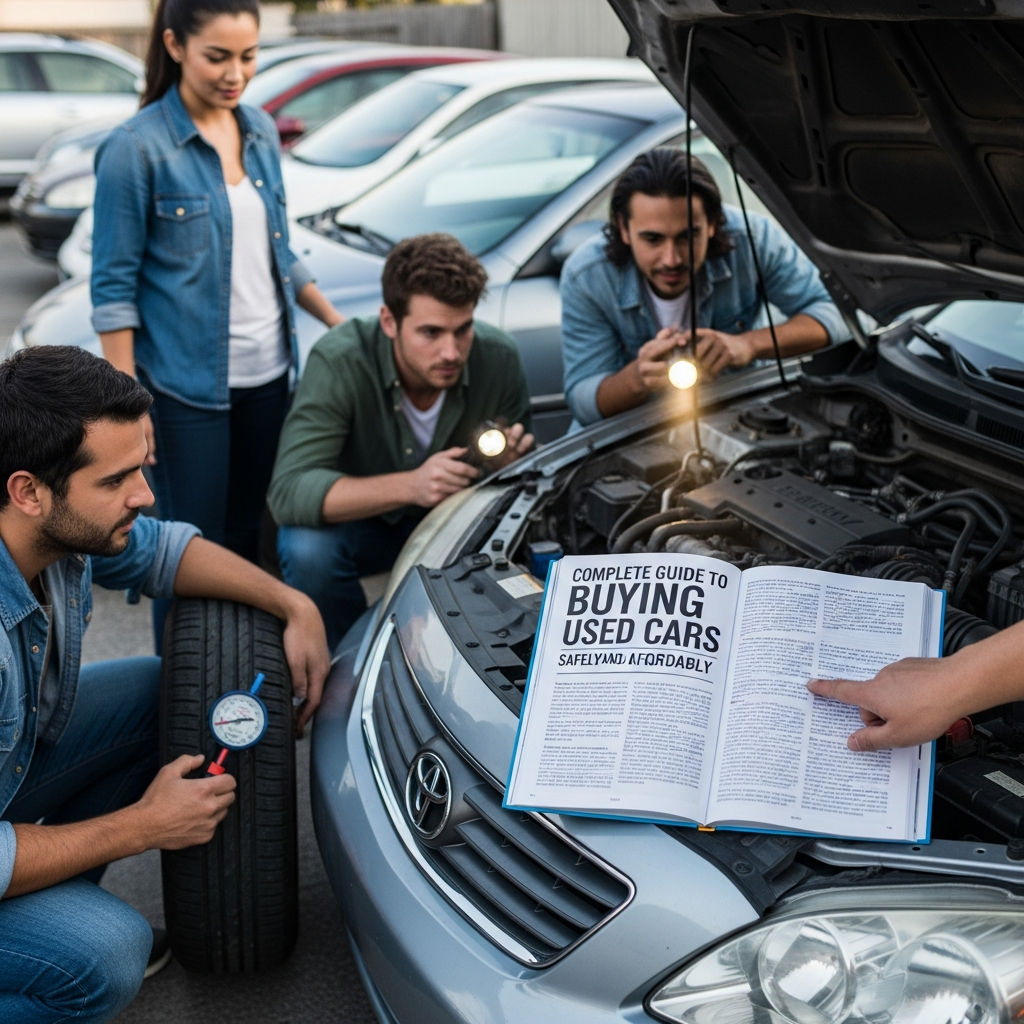
Before the test drive, inspect the vehicle exterior and interior thoroughly:
- Bodywork: Look for mismatched paint, large panel gaps, or overspray, which indicates major collision repair.
- Tires: Check tread depth and look for uneven wear, which suggests alignment or suspension issues. Ensure all four tires are the same brand.
- Interior: Check for excessive wear, water stains (potential leak/flood damage), and ensure all electronics (radio, AC, power windows, lights) work.
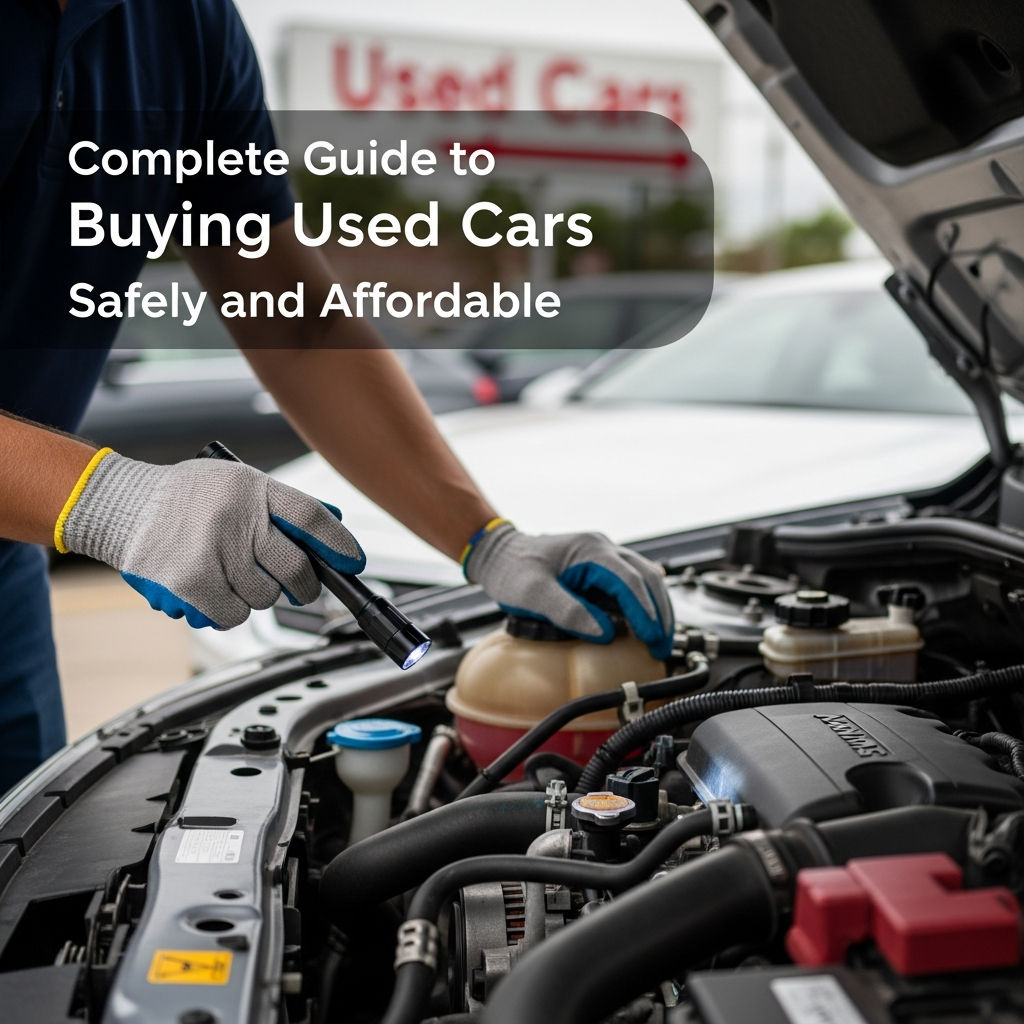
- Under the Hood: Look for fluid leaks (oil, coolant, transmission fluid). Check the battery terminals for corrosion. Ensure hoses and belts look supple, not cracked.
The Comprehensive Test Drive
A good test drive should replicate your typical driving conditions:
- Drive on the highway to test acceleration and high-speed stability.
- Brake firmly at different speeds to check for squealing, grinding, or pulling to one side.
- Turn the steering wheel fully in both directions in a parking lot to listen for clicking sounds (potential constant-velocity or CV joint issues).
- Test the transmission. Listen for hesitation, clunking, or slow shifting when moving from Park to Drive and Reverse.
The Pre-Purchase Inspection (PPI)
Never skip this step. A Pre-Purchase Inspection is a mandatory safety measure for any used car buyer. Take the vehicle (or have the seller take it) to an independent, trusted mechanic—not one affiliated with the seller. A PPI usually costs between $100 and $200 but can save you thousands by identifying hidden problems like rust, engine leaks, or transmission failure.
Phase 4: Negotiation and Closing the Deal
Approach the negotiation with confidence, armed with data from your research and PPI.
Leveraging Inspection Findings
The mechanic’s report is your strongest negotiation tool. If the inspection reveals necessary repairs (e.g., new brakes, worn timing belt), present the repair estimates to the seller and request a deduction from the asking price. Frame the discussion factually, not confrontationally.
The Art of Negotiation
Start your offer slightly below the low end of the fair market value (FMV) identified by KBB and Edmunds. Be prepared for the seller to counter. Maintain your maximum desired price. If a dealer is unwilling to negotiate on price, try to negotiate on “extras” like including a better warranty or a full tank of gas.
Understanding “As-Is” Sales
Most private used car sales are “as-is,” meaning once the sale is final, the seller is not responsible for any subsequent mechanical issues. This highlights why the PPI is absolutely non-negotiable.
Finalizing the Paperwork
Review all documents meticulously before signing. Ensure the odometer reading on the title matches the car. Confirm that the total price, including all fees, matches your negotiated price. If buying privately, ensure you receive a signed title (pink slip) and a Bill of Sale detailing the transaction, price, and VIN.
Phase 5: Post-Purchase Administration
Congratulations, you’ve bought the car! A few final steps are required to make it legally yours.
Insurance and Registration
You must have proof of insurance before you can legally drive the car off the lot or finalize the title transfer. Register the car immediately with your state’s Department of Motor Vehicles (DMV) or equivalent agency. Be aware of the deadlines for title transfer, which vary by state.
Setting a Maintenance Baseline
Even if the service records look good, it’s wise to establish a clean maintenance baseline. Change the oil and filter immediately. Check and replace cabin and air filters. If the vehicle is close to a major service milestone (e.g., 60,000 or 90,000 miles), plan for the transmission fluid flush, spark plugs, and timing belt (if applicable).
Buying a used car is a meticulous process, but by adhering to these five phases—preparation, research, inspection, negotiation, and administration—you transform a potentially risky transaction into a safe, affordable, and rewarding purchase.